[Hood River Grower-Shipper Association]
Community Responds Positively to Education and Incentives on Fruit Trees
More than 41 percent remove trees with potential for infestation
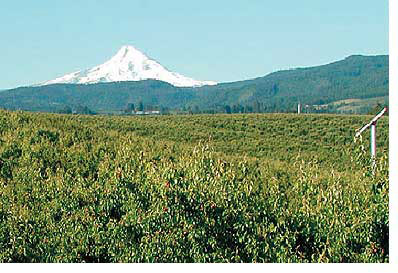 To prevent and control potentially devastating codling moth infestations in Oregon orchards, the Hood River Grower-Shipper Association (HRGSA) embarked on a public awareness and incentive program. The goal was to have 75 percent of the area's non-agricultural fruit tree owners remove or manage their trees to prevent pest infestations.
This is a major issue for Hood River growers. More than 90 percent of its agricultural production is pears, 30 percent of the crop is exported, and many countries have harsh penalties if codling moth infestation is found in fruit for export. For example, three detections could shut down all U.S. exports of pears to Taiwan. "And they're not the only country that will do that," said Jean Godfrey, executive director of the Hood River Grower-Shipper Association. "If it happened to us it would devastate the pear market."
Unmanaged fruit trees that become infested with codling moth spread the infestation to adjacent orchards, posing this serious risk to the grower and shipper industries. Growers are then forced to apply insecticides that they might otherwise not need. In addition, IPM programs that include the use of mating disruption to control codling moth have been rendered ineffective by adjacent infestations, further limiting the environmentally sound options for growers to manage pests.
HRGSA identified 777 properties with apple and pear trees that were not connected to a commercial orchard. Of those, face-to-face contact was established with owners of 515 of the properties. The remaining 262 residents received literature at least 4 times (once through the mailing, three times through the door-to-door campaign). Currently, 154 property owners have removed the pear and apple trees, and another 81 have signed up to remove their trees. The results are that 46% of the people spoken with have removed their trees and the remaining 54% have committed to maintaining their trees pest free. There have been 670 trees removed (this figure does not include those who pledged to remove the trees, but have not yet done so).
The most successful part of the program was the door-to-door campaign. Talking with individuals and explaining the importance of the program and answering their questions resulted in community participation more than anything else. The newspaper articles, press releases and the brochure resulted in numerous phone calls for several days, but the same overall success would not have been had without personal contacts. As part of the program, HRGSA offered coupons to local nurseries for tree replacement, and the public reaction was very favorable toward it. "The coupons were such an excellent incentive that only three people turned them down," stated Godfrey.
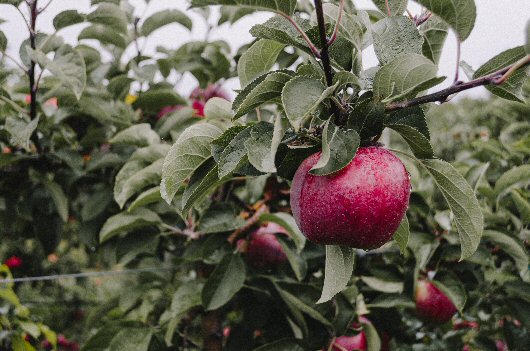 Homeowners who elected to keep their trees will receive support from the county extension office. "We give them all the information and tell them to call the extension office in the spring, and they'll set them up on a spraying schedule," said Godfrey. "We're doing everything we can short of spraying the trees ourselves."
The unmanaged tree problem has been largely caused by orchards shutting down, selling off and being developed as residential properties. "The orchard trees are on the lots, and the residents who buy the homes have no knowledge of what it takes to care for several full-grown orchard trees," said Godfrey. "One developer is even using an orchard experience theme to market his property, and people don't realize you have to spray these trees, and that with some sprays you have to stay away for up to 48 hours."
To date, the community has been supportive. "We're very pleased with the response," she said. The project team learned through this intense one-year program that a full-time program must be implemented. "While most people cooperate once they understand the need, maintaining education and communication with the public is key."
HRGSA will continue their efforts to reach all identified property owners. A follow up letter will be sent out reminding individuals of their commitment to remove trees which will result in a coupon. HRGSA will fund a position through Hood River County for an individual to check the trees during June through August to determine if they are being maintained pest free. "We are working with the Hood River County Board of Commissioners on a new ordinance that would require all trees to be removed if a commercial orchard is sold for development," states Godfrey. HRGSA will continue to fund the coupon program and to work with local developers and real estate agents. "It will be necessary to keep this subject in front of the public and to discourage the planting of new apple and pear trees."
For more information please CLICK HERE.
Putting the Farm Bill to Work Quick Links
- Appalachian Region
- California
- Georgia
- Michigan
- North Carolina
- North Carolina Apple Growers
- North Carolina Nursery Crops
- North Carolina Christmas Trees
- North Carolina Strawberry Growers
- North Carolina Strawberry Survey
- North Carolina Sweetpotato Producers
- North Carolina Sweetpotato Survey Summary
- Western North Carolina Vegetable Growers
- Oregon