CLICK HERE for a copy of Working from the Ground Up (PDF -992K).
 The methodology that CAP pioneered for organizing projects, documented in "Working from the Ground Up", is being used to increase the capacity of agricultural communities to protect the natural resources in the Chesapeake Bay. Working on behalf of the Chesapeake Bay Funders Network (CBFN)and in cooperation with the University of University of Maryland’s Center for Environmental Sciences, CAP has and has worked with CBFN to develop extensive Guidance for identifying organizing and supporting large scale field projects. The Chesapeake Bay region projects include:
- Adaptive Livestock Exclusion Project (PDF - 14KB)
In Virginia's Shenandoah Valley conservationists and farmers are engaged in designing site specific solutions through a "flexible fencing and grazing management" pilot project, designed to keep animals out of streambeds. Additional information can be found in the summary of the Downstream Project (PDF - 45KB). - No-Till Farmer-to-Farmer Mentoring, Lebanon County (PDF - 116KB)
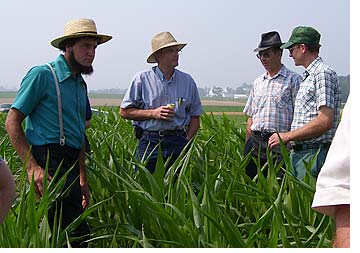
This, again, is a first in the state of Pennsylvania program. It expands technical assistance through the peer to peer aspect of farmers learning from farmers. A no-till cropping system is a cost-effective way to reduce soil erosion, decrease labor and fuel costs, retain carbon and nitrogen, and improve water quality. Pioneering efforts in Pennsylvania to utilize expert farmers to fill the gap in government technical assistance programs is generating valuable "lessons learned" that feed the learning curve of the new CBFN Maryland Grazers Network project as they engage experienced rotational grazers to advise new farmers.Accomplishments:
- 34 farms – 13 farmer advisors, 21 new farmers
- 3,800 new acres of no-till conservation adopted representing 44% of all new no till acreage within 7 counties; mentor-assisted acreage 5 times higher than the county with the next highest no till acreage; 53% of new no-till acres started by farmers new to the practice.
- The Warwick Initiative - Conservation Plan (PDF - 84KB)
Lancaster County Soil Conservation District and Warwick Township, in concert with other public and private groups are working together to develop and to implement conservation plans for the agricultural community in northern Lancaster County. - Pennsylvania Community Farm Composting – Lancaster County
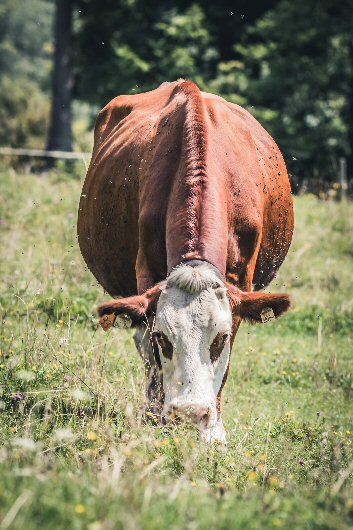 Pennsylvania is one of the nutrient hot spots of the Bay with an excess of manure. This new project also formally launched in January 2008, directly supported by the Kellogg Foundation, will use a community-oriented dairy and beef farm, to showcase a medium-sized on- farm composting site capable of taking in 40% of its capacity from surrounding farms including poultry, as well as community-collected yard waste. The unique partnership links the needs of Mannheim Township with excessive leaf and yard waste with local farm agricultural waste to render high grade value compost for landscaping, schools, roads, and government buildings. Partners include the progressive Oregon Dairy, the local agriculture consulting and engineering services of TeamAg, the experience of compost engineers Terragro, Environmental Defense and Chesapeake Bay Foundation. Support for the project is growing from the State Secretary of Agriculture to the local Board of Supervisors.
Year Two Accomplishments:
- All state/local permitting; new township regulatory changes
- 2 hoop structures in place
- Raised over $1.150 million to date in cash to match the first year $327,000 investment of CBFN and Kellogg.
Three-Year Goals
- 12,000-14,000 tons of manure and litter/yr
- 4,000-5,000 tons of yard waste converted to 16,000 cubic yards of high quality compost for sale
- 280,899 lbs nitrogen and 245,700 lbs of phosphorus reduction annually.
- Maryland Grazers Network
One of the most effective practices for saving farmers money, improving soils and nutritional value of animal production, providing greater market opportunities and protecting water quality is rotating livestock in grass pastures in place of concentrated feeding associated with intensively grown feed grains. Launched in January 2008, the new Maryland CBFN pilot, with the assistance of the Kellogg Foundation, funds a first-in the state farmer mentoring program aimed at promoting "grass-fed" livestock. Eight experienced farmers signed up immediately to be advisors and with the assistance of partners from the University of Maryland, USDA, Chesapeake Bay Foundation and Future Harvest will provide environmental and economic plans for each new farmer, establish marketing options such as selling "local grass-fed", and will "mentor" the operations through the difficult start up transitions.
Year Two Accomplishments:
- 17 farmer partnerships (10 mentor advisors/17 new farmers)
- 9 new product marketing plans
- W.K.Kellogg Foundation award for innovation in learning for farmer-created 2010 Calendar on grazing
- 1,125 acres of pasture involved: 250 acres reseeded
- 110 acres cropland converted to pasture
- 700 managed grazing acres
- 1-2 miles of stream fencing
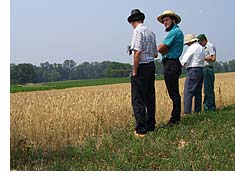 ChesapeakeThe CBFN Initiative, Strong Communities, Healthy Waters, supported in part by the W.K. Kellogg Foundation provides a further opportunity to apply the CAP methodology for designing ambitious projects that create lasting changes. The Initiative is dedicated to increasing the capacity and engaging the energies of rural communities in creating sustainable farming systems. The Initiative brings together the energies and resources of private funders in the Chesapeake Bay region to create a critical mass of support for innovative partnerships within rural communities and to establish a collaborative network among rural communities and organizations. In the past year the Initiative has helped organize two innovative community partnerships that harness market forces in creating sustainable solutions to the problems associated with excess livestock waste.