California Walnut IPM Expansion Project (2001-2003)
Walnut Integrated Pest Management Expansion Project
 In 2002 CAP launched its Walnut Integrated Pest Management Expansion Project in California, focused on ground-up orchard-based implementation of mating disruption for codling moth to improve the sustainability and environmental effects of commercial walnut production in the Sacramento and San Joaquin Valleys.
California produces 99 percent of U.S. walnuts, which is approximately 38 percent of the walnuts produced worldwide. The state has 207,520 acres of walnut orchards - 180,771 acres of bearing walnuts, plus 26,748 acres of non-bearing. Over 90 percent of California's walnut production occurs in the Sacramento and San Joaquin valleys. This region, particularly in the south valley, is also where the most severe insect problems exist. Codling moth (Cydia pomonella) is the key walnut pest in California and the most economically harmful pest statewide. Approximately 60 percent of walnut acreage is susceptible to codling moth damage. If left uncontrolled, codling moth infestation can result in serious damage on more than 40 percent of the harvested crop, leading to significant economic impacts on growers.
The project had the following objectives:
- To implement a systematic process for further adoption of a sprayable pheromone-mediated mating disruption system on a wide scale in commercial walnut production
- To measure, document, evaluate and communicate economic, biological, and decision-making changes in the adoption of sprayable mating disruption at the farm, project, and industry levels.
In February, a focus group with the core cooperators was conducted by a facilitator to develop the work plan for the 2002 field season.
Participants were prompted to provide their views of what work needed to be conducted to successfully accomplish project objectives during the coming growing season. They emphasized that, during this first field year, they needed to experience the operation of the project and test their individual experiences as they attempted to accomplish the project objectives.
 The involvement of commercial Pest Control Advisors (PCAs) was the most important factor for increasing the implementation of reduced risk technologies. Because of their involvement, the project was able to implement sprayables on 900 commercial acres in a short period of time. As they develop confidence in new practices they are able to spread their knowledge to other grower clients with whom they work, thereby expanding adoption. The PCAs in this project consult on 30,000 acres of walnuts so the impact of their participation extends well beyond the acreage formally in the project. Their work is the necessary step between experimentally designed research and wide scale adoption by growers. The engagement of the private sector accomplished in this project was the key to creating and sustaining adoption of new technologies after the project ends.
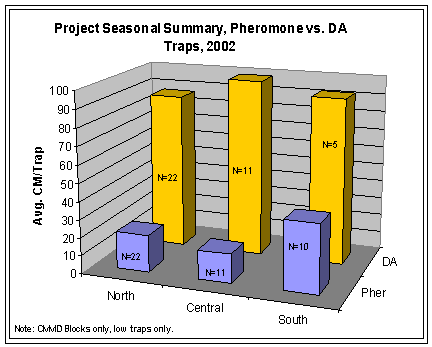
Project participants implemented commercially practical field evaluation methodologies and protocols throughout the season. At the same time they collected biological, economic and decision-making data. As a result of their field experience with the project, cooperators determined that the use of sprayable pheromones and kairomone baited traps were potentially valuable tools in the future management of walnut pests.
This fact was particularly evident in the expressed desire of the core cooperators to continue the project work into a second field season (2003).  As a result of their 2002 experience, these cooperators had initiated plans for modifying their use of the target technologies to better determine their fit into their commercial IPM programs.
The project and its methodology are having influence far beyond the confines of the walnut industry. The project has been chosen as one of the initial case studies for presentation to the Environmental Protection Agency’s Committee to Advise on Reassessment and Transition (CARAT). View CARAT case study (PDF file size approx 400K)Thus, the experiences in implementing reduced risk technologies and the process by which it took place will help to inform the larger discussion on how to support and facilitate the adoption of more environmentally sound farming practices in the Central Valley and the rest of the country.
View the Final report (PDF file size approx 5 MB)
Outreach
Three major articles featuring the project were published in 2002. The first article was published in the June 19 edition of The Sacramento Bee newspaper. This article highlighted CAP and the walnut project effort in the Sacramento Valley.
A second article was published in January 2002 by Diamond of California, the state’s largest grower-cooperative walnut processor, in their quarterly newsletter. This article, published in the quarterly newsletter, introduced CAP and the walnut project to all Diamond cooperators.
A third article was published by the California Walnut Commission in its summer newsletter. This article described the CAP project in its context as an outgrowth of the Walnut Pest Management Alliance project and was sent to all California walnut growers.
- Growers and their organizations
- the California Walnut Marketing Board
- Diamond Walnut Cooperative
- Pest Management Consultants
- Researchers
- Farm Advisors
- The Nature Conservancy